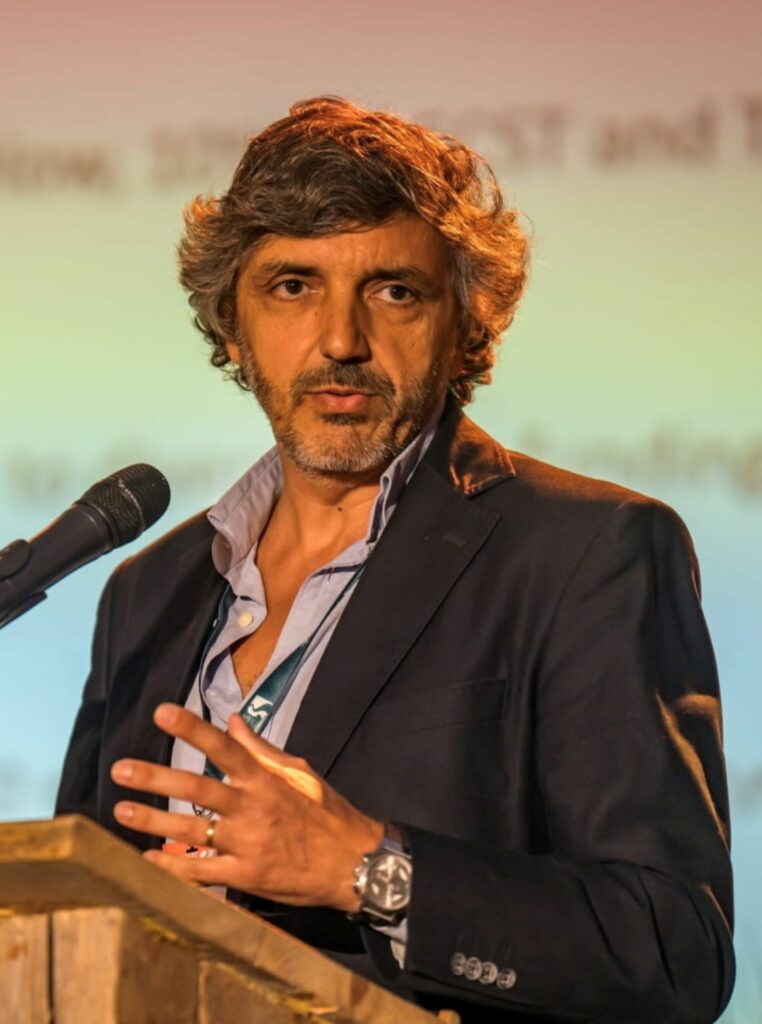
JOÃO CARDOSO DE MELO. Senior Landscape Architect | Cascais Ambiente Ecological Infrastructure & Nature Conservation Director
João Cardoso de Melo is a Senior Landscape Architect and Director of Ecological Infrastructure Management at Cascais Ambiente, Portugal, with over 25 years of experience in ecological infrastructure, nature conservation, and environmental management. He has led major initiatives in biodiversity conservation, ecological restoration, climate change adaptation, and wildfire risk management, including the development of Quinta do Pisão Nature Park and the Cresmina Dune Interpretation Center. He is an elected Council Member and Treasurer of the EUROPARC Federation and chairs its Commission for Sustainable Agriculture in Protected Areas. He is also involved in European environmental projects, including LIFE ResLand, and regularly contributes to international environmental forums, including the United Nations Climate Change Conference (COP). In 2024, he received the Environmental Merit Medal from Cascais Municipality in recognition of his contributions to landscape architecture and nature conservation.
KEYNOTE SPEECH:
Conservation projects in Cascais.
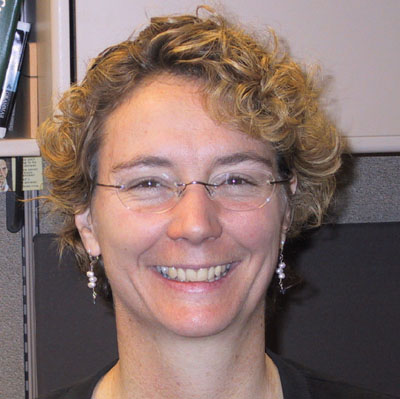
Dr. Patricia N. Manley, Research Ecologist at the US Forest Service Pacific Southwest Research Station
Dr. Manley’s research is transdisciplinary and focuses on the effects of management, landscape disturbance dynamics, and climate change on biological diversity and a wide array of natural resources, primarily in temperate forests. She has a BS and MS in Natural Resources Science with an emphasis on wildlife and forestry, and a Ph.D. in Wildland Resource Science, with an emphasis on biological diversity and vertebrate community ecology. She has worked for the US Forest Service for over 30 years, initially as a technical expert in forest management to conserve biodiversity, and the remainder as a research scientist and leader focused on forest and biodiversity conservation science. She has worked at the interface of research, management, and policy at local, state, national and international scales. Most of her career has been dedicated to enhancing our understanding of the role and impact of management in sustaining and improving biological integrity, and to making scientific information on biodiversity, natural resource dynamics, and ecosystem resilience readily accessible and applicable to managers and policy makers through models, decision support tools, and monitoring. Monitoring environmental change to inform science and management, and building scientific information into decision support tools for managers are major areas of emphasis in her research portfolio. She has published over 100 peer-reviewed papers and high-impact technical reports.
KEYNOTE SPEECH:
The art of forest resilience: Knowing when to hold ‘em, mold ‘em, and walk away.

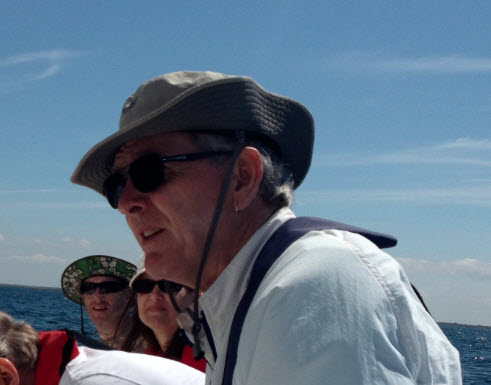
Philip Murphy is the CEO of InfoHarvest Incorporated, a decision support company he cofounded in Seattle in 1995.
His early work in Japan on neural networks and expert systems led to a career focused on applying knowledge representation, machine learning, and decision support systems to complex environmental and policy challenges. He has developed decision support tools for US agencies including the Forest Service, Bureau of Land Management, US Army Corps of Engineers, US Fish and Wildlife Service, and NASA, and has worked extensively with rural communities and Tribes in the western United States. Over the past decade, his work has focused on supporting decisions under climate and land-use change through the integration of forest, hydrological, and ecological models. He co-founded the EMDS Consortium and the Spatial Decision Support Consortium and collaborates with researchers across the US and Europe.
He has spent more than 20 years helping advance the Ecosystem Management Decision Support (EMDS) framework, integrating knowledge representation, simulation workflows, portfolio analysis, and uncertainty assessment. The latest EMDS version combines knowledge graph technologies and large language models to enhance decision support. In this presentation, he will introduce these recent developments and illustrate them through a case study with the Tulalip Tribes, focused on evaluating nature-based solutions for wildfire risk reduction.
KEYNOTE SPEECH:
Latest developments of the Ecosystem Management Decision Support (EMDS).


Dr Keith M. Reynolds is a retired Research Forester at the USDA Forest Service, Pacific Northwest Research Station, USA.
He is Doctor in Plant Pathology and Biomathematics, and an internationally recognised expert in decision-support systems for forest and environmental management. His research focuses on integrating artificial intelligence, multicriteria decision analysis, ecological modelling and spatial information to support complex landscape management decisions. He is the principal developer of the Ecosystem Management Decision Support (EMDS) system, which he led for nearly three decades. EMDS integrates scientific knowledge, environmental data and decision models to support forest restoration, wildfire risk assessment, fuel treatment prioritisation, ecosystem sustainability assessment and strategic landscape planning. His work has contributed to numerous applications of decision-support technologies in the United States and internationally. He has also participated in major European research initiatives, including FORSYS, MOTIVE and SuFoRun, advancing international collaboration in forest decision-support systems. He has authored numerous scientific publications and book chapters on environmental decision-making, landscape resilience and sustainable forest management.
KEYNOTE SPEECH:
Latest developments of the Ecosystem Management Decision Support (EMDS).
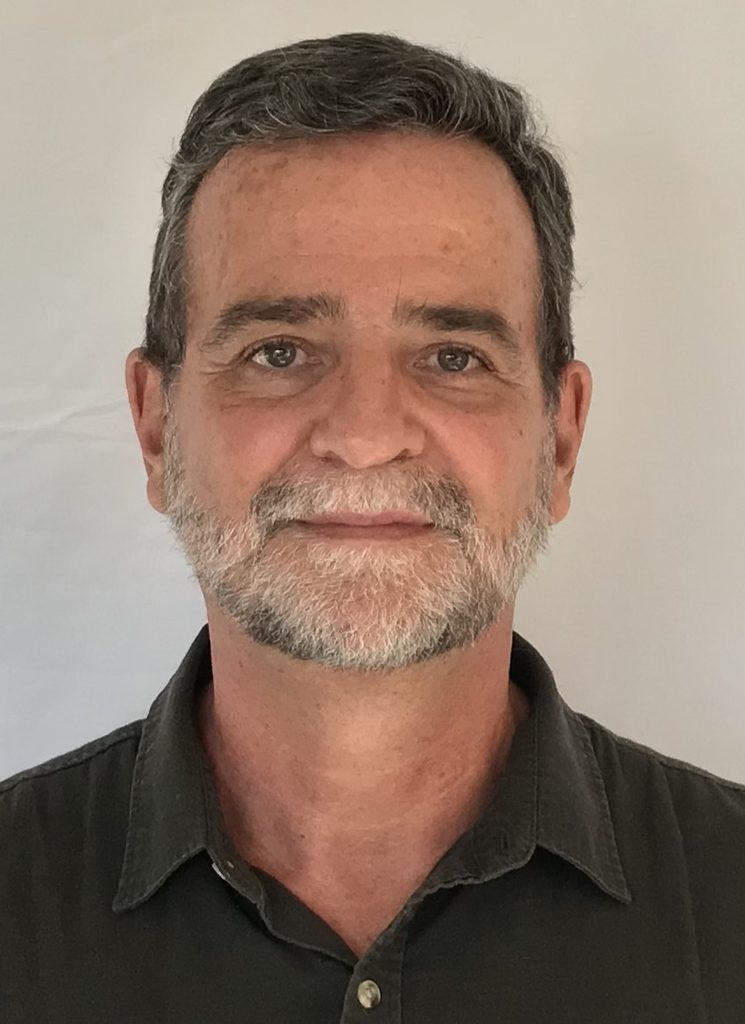
Luiz Carlos Estraviz Rodriguez is Full Professor of Forest Economics and Planning at the Department of Forest Sciences, Escola Superior de Agricultura “Luiz de Queiroz” (ESALQ), University of São Paulo (USP), Piracicaba, Brazil.
He holds a BS in Agronomic Engineering from the State University of Londrina (1982), an MS in Agricultural Economics from ESALQ/USP (1987), and a PhD in Forest Management and Biometrics from the University of Georgia (1993). He joined ESALQ/USP in 1984 and was Visiting Professor at Northern Arizona University (1992–1993). At USP he has served as Head of the Department of Forest Sciences (2020–2024), Director of CIAGRI (the university’s center for information technology in agriculture), and coordinator of the graduate program in Forest Resources. From 2007 to 2009, he was the first Executive Manager of Planning at the Brazilian Forest Service, and he chaired the ITTO Expert Panel in 2010. His research covers forest management and economics, forest valuation, decision support systems, mathematical optimization of forest planning, and LiDAR-based quantification of forest biomass. He leads the FAPESP Thematic Project DecisionES BR and the European MSCA-RISE network on decision support for ecosystem services under global change. He has supervised 40 master’s and doctoral theses, and authored or edited 14 books, including textbooks on topics he teaches at USP, and more than 80 scientific papers (h-index 18, over 1,600 citations in Web of Science). He is also a shareholder in and mentor to ForLiDAR, a startup that provides forest-LiDAR data processing services.
KEYNOTE SPEECH:
.

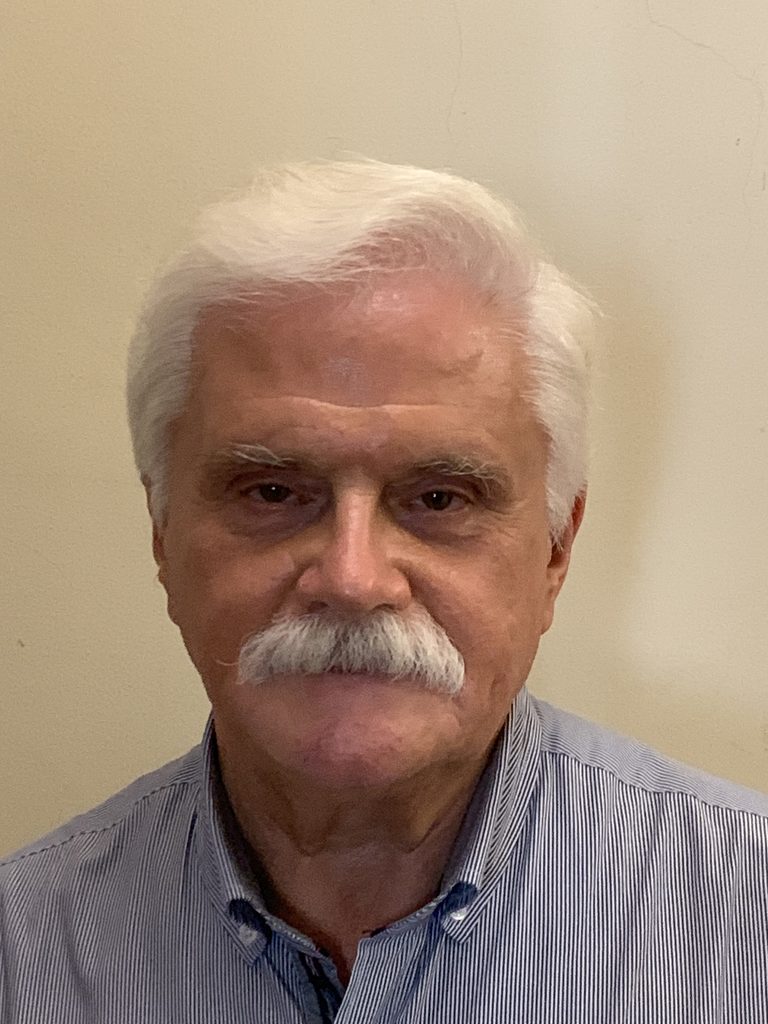
AMÉRICO M.S CARVALHO MENDES. PhD Economics (The University of Arizona, 1995), Associate Professor of Economics, Católica Porto School of Business and Economics, Coordinator of ATES (Transversal Area of Social Economics of the Catholic University of Portugal in Porto)
Américo M. S. Carvalho Mendes is an associate professor of Economics at Católica Porto School of Business and Economics. He completed his PhD in Economics at The University of Arizona in 1995. At the Catholic University in Porto he has been Deputy Dean and President of the Scientific Council of the School of Business and Economics. Since 2011, he has also been the coordinator of a transdisciplinary unit in the area of Social Economics involved in research, higher education programmes and university extension work with social economy organizations. His interests in the area of Social Economics, include research and voluntary service as member of the board of small scale private forest owners’ associations at the local and national level. He has been an instructor in this area in the Master Degree Mediterranean Forestry and Natural Resources Management (MEDFOR). From January 2006 to December 2010, he served as member of the Scientific Advisory Board of the European Forest Institute.
KEYNOTE SPEECH:
Governance and payments of ecosystem services

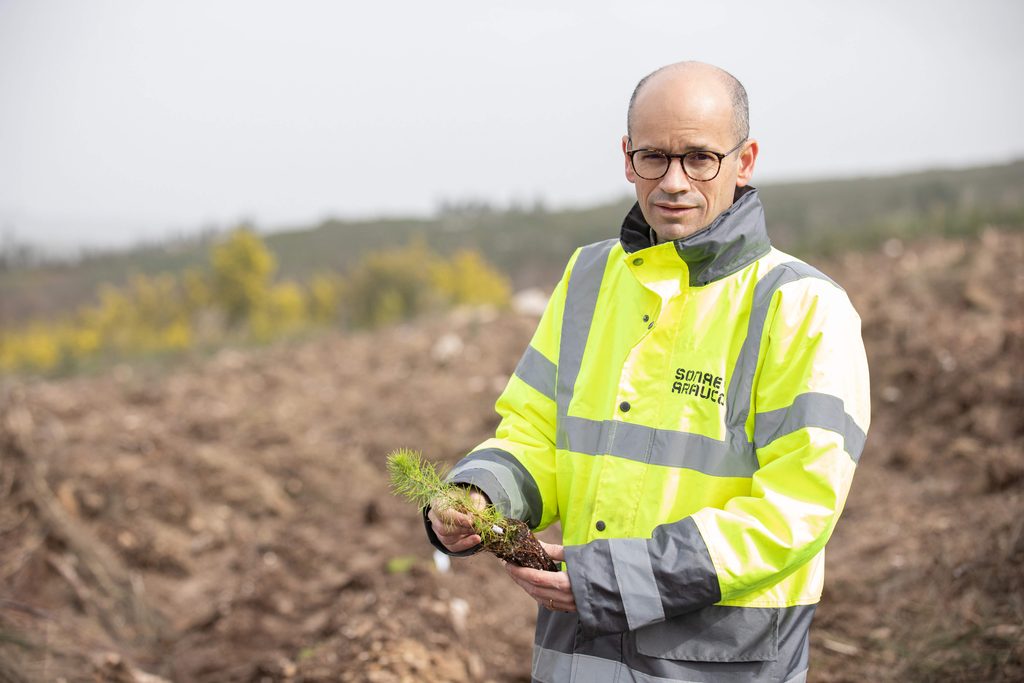
NUNO CALADO. Forest Engineer working at SONAE ARAUCO.
Forest Engineer with more than 25 years of experience in the forestry sector, he has been working at Sonae Arauco since 2018, holding responsibilities in the areas of forest management and sustainability. He is also a member of the Board of Directors of Centro PINUS and ForestWISE CoLAB.Nuno Calado is a Forest Engineer with over 25 years of experience in the forestry sector. He currently serves as Wood Regulation & Sustainability Manager at Sonae Arauco, leading initiatives in corporate ESG/sustainability, forest management, circular bioeconomy and forestry R&D. His responsibilities also include the operational management of forest portfolios, notably the Sonae Forest and the Antarr project, focused on restoring degraded areas through a biodiverse and productive forest model. He is President of CoLAB ForestWISE and a Board Member of Centro PINUS, promoting innovation and collaboration to strengthen the resilience, productivity and sustainability of Portuguese forests.Forest Engineer with more than 25 years of experience in the forestry sector, he has been working at Sonae Arauco since 2018, holding responsibilities in the areas of forest management and sustainability. He is also a member of the Board of Directors of Centro PINUS and ForestWISE CoLAB.
KEYNOTE SPEECH:
Forest planning experience in private companies.

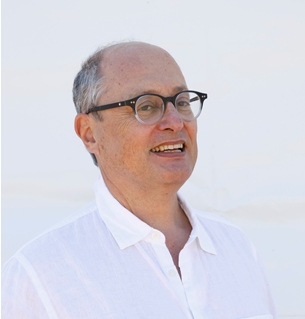
JOSE LUIS CARVALHO. Coordinator of the Forest Innovation Area at The Navigator Company.
He has led teams in the development of forest monitoring tools, forestry equipment and robotics, management applications, new silvicultural practices, and social innovation initiatives aimed at engaging forest owners in forest management and increasing productivity, particularly among smallholders. He has also been involved in the development of forest management certification.
He has participated in projects introducing new technologies in Portugal to support forest planning and management, namely geographic information systems (GIS) and geolocation technologies for forest asset management. He has also been involved in bioenergy projects and in establishing biomass supply chains both in Portugal and in the United States (South Carolina). He has led several research and innovation (R&I) projects, most recently rePlANT, and is an active participant in many Forest Innovation and Research consortia.
He is involved in scientific and professional associations and has authored and co-authored several published articles. He enjoys sailing, jazz, and photography, from which he draws valuable insights for his professional life
KEYNOTE SPEECH:
Evolution of Planning and Management Tools for Private Forests in Portugal.

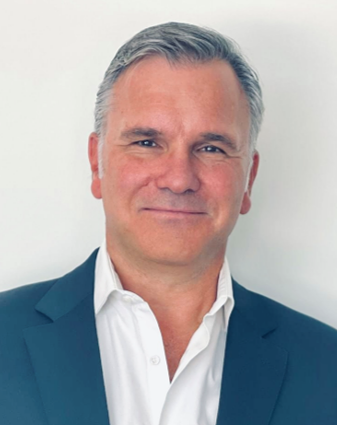
Luís Unas is Operational Director at iNovaland and Managing Director of Investment Advisory at Nature & Capital.
A forestry engineer with 30 years of experience, he specialises in forest landscape restoration, natural capital investment and agroforestry asset management. Since 2008, he has led the management and value creation of over 20,000 hectares across four European investment vehicles. Since 2026, he has also been involved in managing over 20,000 additional hectares of native forest restoration in Africa and South America. He holds an MSc in Forest Resources Engineering from the University of Lisbon and an MBA from Católica Lisbon School of Business & Economics.
KEYNOTE SPEECH:
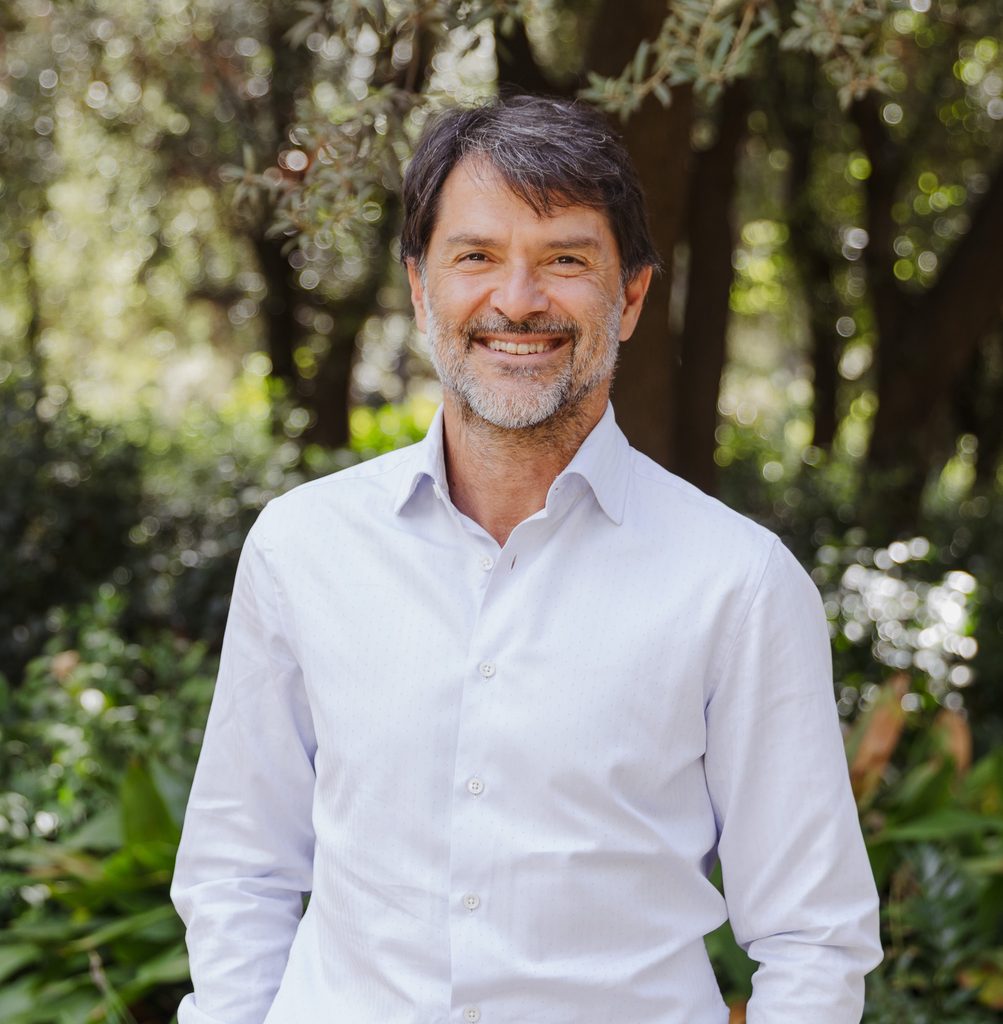
JOAN CABERZAS is CEO and Co-founder of Nactiva.
Leader in impact economics with senior management experience in Latin America, Europe, the Middle East, India, and Asia-Pacific. Since the beginning of his career, he has contributed to organisational, financial, and management innovations that help solve major social, environmental, and economic challenges.
He has worked with governments, corporations, investors and regional organisations on the regeneration of natural capital, regional economic development, improving public management and social justice. Since 2018, he has been director of the Global Innovation Hub at The Palladium Group, focusing on the design and implementation of positive impact solutions in collaboration with large companies, investors and local communities in more than 50 countries.
KEYNOTE SPEECH:
JOSE BORGES. Professor at the Instituto Superior de Agronomia (ISA), University of Lisbon (Portugal).
Ph.D. in Forest Sciences (U. Minnesota, USA), full professor at the School of Agriculture (ISA), ULisboa. Coordinator of IUFRO Unit 4.04.04 Landscape Management Planning for Multiple Ecosystem Services and of the Erasmus Mundus Joint Master Degree Mediterranean Forestry and Natural Resources Management (MEDFOR). Has 30+ years of higher education, research and outreach experience in forest management planning methods and decision support systems in ISA and in international universities. Responsible for forest and natural resources management courses in ISA with participation in several international courses. Acted as PI or as coordinator of the participation of ISA in national and international projects targeting the development of forest management planning methods, of tools to analyse trade-offs between ecosystem services and of business models to attract payments for these services. Co-authored over 130 international peer-reviewed publications.
KEYNOTE SPEECH:
History of Marie Curie Exchange of Knowledge projects related to forest planning, from global scientific results to local impacts.
JORDI GARCIA-GONZALO. PhD in Forest Sciences. Head of the Landscape Dynamics and Planning at the orest Science and Technology Centre of Catalonia in Solsona (Spain).
PhD in Forestry from the University of Joensuu (Finland) in 2007. Former rearcher at the the School of Agriculture in Lisbon (Portugal). Now Head of the Landscape Dynamics and Planning programme at the Forest Science and Technology Centre of Catalonia in Solsona (Spain). His research interests focus on the development of forest ecosystem management models, optimization methods and decision support systems. The main objective is to develop scientifically sound methods that can be used by the public administration, forest owners, industry and non-governmental organizations for enhanced integration of adaptive strategies in multiple-objective landscape management planning and for an improvement of existing policy and management approaches. This includes the development of innovative tools and methods (e.g decision support systems) that may address the complexity of multi-objective and multi-stakeholder landscape planning under climate change and other risks (e.g. forest fires, pests). The results of his research have been published in more than 80 SCI articles.
KEYNOTE SPEECH:
History of Marie Curie Schange of Knowledge projects related to forest planning, from global scientific results to local impacts.
New Tools for Spatial Planning.