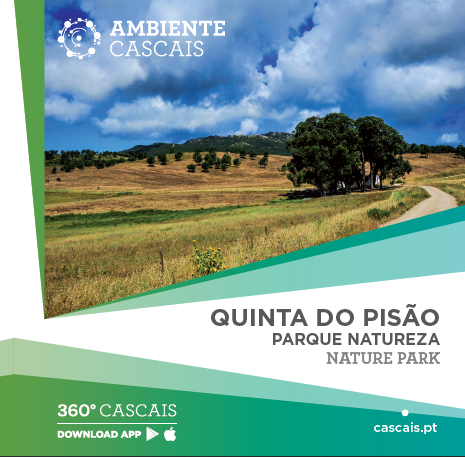
Quinta do Pisão – Nature Park, Cascais, Portugal.
Located on the southern slopes of the Sintra-Cascais Natural Park, in the municipality of Cascais, Portugal, Quinta do Pisão is a 380-hectare natural and cultural landscape that stands as a benchmark for biodiversity conservation, ecological restoration, and agro-silvo-pastoral management in Portugal. Managed by Cascais Ambiente, this multifunctional landscape seamlessly integrates natural ecosystems, historical heritage, and sustainable land-use practices within a peri-urban environment.
The nature park actively employs traditional and innovative rewilding strategies, utilizing large herbivores – such as Miranda donkeys, Sorraia horses, Serrana and Bravia goats – for natural vegetation control and biomass reduction. This conservation grazing approach plays a fundamental role in wildfire prevention while fostering habitat heterogeneity across the landscape.
Quinta do Pisão encompasses a rich mosaic of Mediterranean ecosystems, ranging from shrublands, grasslands, agriculture and native oak woodlands stands of cork oaks (Quercus suber) and Portuguese oaks (Quercus faginea) to restored wetland habitats that host a wide variety of native fauna, including bird species, amphibians, and small mammals.
Alongside its ecological value, the park preserves important cultural heritage, featuring centuries-old structures such as historical lime kilns (fornos da cal) and traditional sheep folds, integrated with active organic farming practices. Through a diverse network of trails, an interpretation center (Casa da Cal), and community-oriented initiatives, Quinta do Pisão demonstrates how sustainable land management can effectively balance biodiversity conservation, wildfire risk mitigation, and environmental education for the public.
For participants in SSAFR 2027, a visit to Quinta do Pisão offers an opportunity to discover practical approaches to Mediterranean landscape management and to discuss how nature-based solutions, fuel management and the restoration of native ecosystems can contribute to building more resilient landscapes in the face of climate change and increasing wildfire risk.
For the field trip, no special equipment is needed. In any case, it may rain, so we recommend bringing a raincoat and waterproof shoes.